



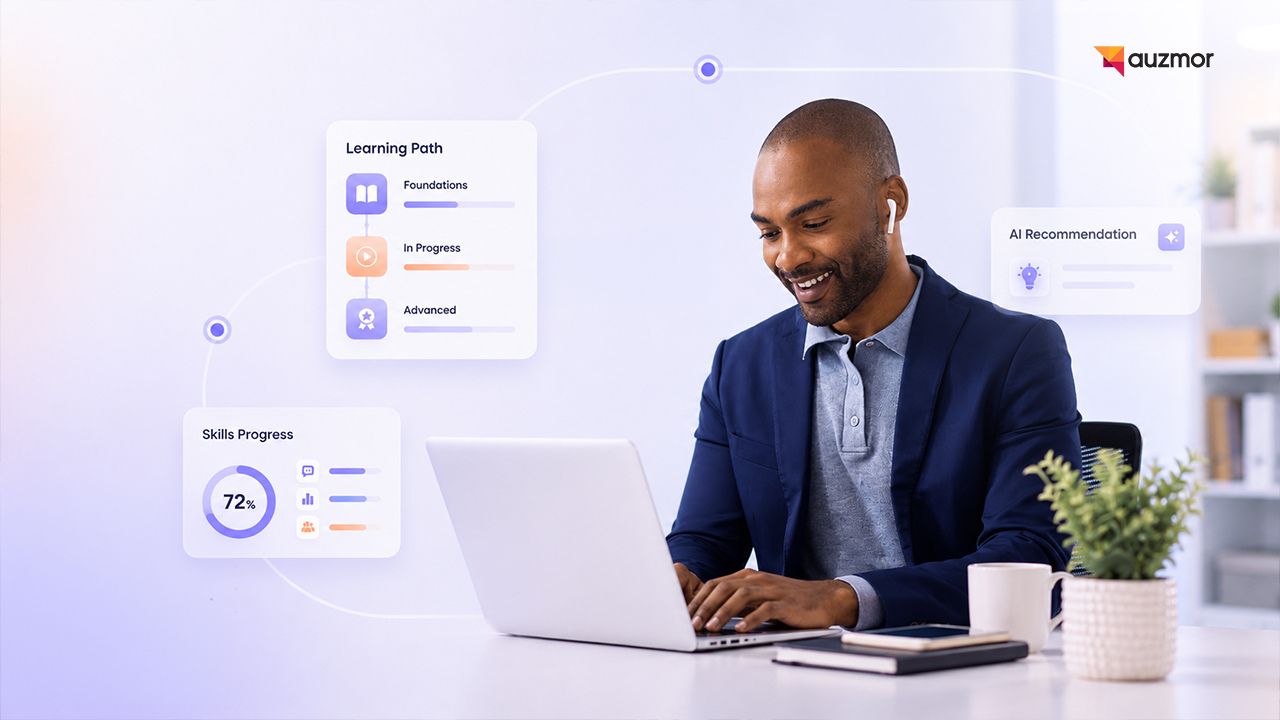
Most companies still think about learning the way they think about compliance. Schedule the session, check the box, move on. It worked fine when jobs stayed the same for years at a stretch. It does not work now. Roles shift every few quarters, tools change even faster, and the skills that got someone hired two years ago are quietly going out of date while nobody is watching.
That is the real problem with a "program" mindset. A training program has a start date and an end date. It assumes learning is an event rather than a condition. The organizations pulling ahead right now have stopped running programs and started building something closer to an ecosystem, a living structure where learning is woven into daily work rather than bolted onto it. Platforms built for this shift, like the ones behind Auzmor Learn, are part of why that change has become so achievable for mid-size and growing teams. Think about it this way: a program tells people when to learn. An ecosystem lets them learn when they actually need to.
Why the Old Training Model Is Breaking Down
The classic corporate training model was built for a slower world. You hired people, ran them through onboarding, gave them an annual refresher or two, and assumed the rest would come from experience on the job. That structure made sense when the average employee stayed in one role for a decade and the tools of the trade barely changed year to year.
None of that holds anymore. The reality is that skill half-lives have shrunk dramatically. What someone learned in a certification course three years ago might already be half obsolete. Meanwhile, employees are not waiting around for HR to schedule their next development. They are looking things up on YouTube, asking AI tools for quick explanations, and picking up new skills in the flow of their actual work, often without telling anyone.
This creates a strange gap. Companies keep investing in structured training calendars while employees increasingly learn through unstructured, self-directed channels. The two paths rarely intersect, and that disconnect is exactly why so many training initiatives fail to move the needle on performance. To be fair, it is not that training content is bad. It is that the delivery model assumes people learn in blocks, when most people now learn in fragments, squeezed between meetings and deadlines.
What a Learning Ecosystem Actually Looks Like
An ecosystem is not a bigger course library. It is a shift in how learning connects to the rest of the business. A few things tend to define it.
Learning lives inside the workflow, not outside it. Instead of pulling someone away from their desk for a two-hour workshop, an ecosystem delivers a short module, a walkthrough, or a coaching nudge at the exact moment it is relevant. Someone about to run their first client call gets a five-minute refresher on objection handling right before the meeting, not three weeks earlier in a classroom setting.
Content comes from more than one source. In a training program, the L&D team writes the material and everyone consumes it. In an ecosystem, subject matter experts across the business contribute, managers add context specific to their team, and even peers share what worked for them. This is part of what separates a modern learning experience platformfrom a traditional course catalog. It pulls learning from many directions instead of pushing it from one.
Data drives what happens next. Rather than assuming everyone needs the same curriculum, an ecosystem tracks what people actually struggle with and adjusts. If a whole team is stumbling on the same skill gap, that becomes visible fast, and the system can respond by surfacing more relevant content before performance suffers.
Managers are active participants, not bystanders. In most companies, once someone finishes a training session, the manager rarely follows up. In a real ecosystem, managers are looped into what their people are learning, so coaching conversations and daily work reinforce what training introduced instead of letting it fade after a week.
This is where the shift becomes tangible for a lot of teams. Building this kind of connective tissue between content, managers, and daily work used to require a patchwork of disconnected tools. Now it can sit inside one system that ties learning paths to performance signals and gives people development that adapts as their role does, rather than staying frozen at whatever level it was set at during onboarding.
The Business Case Nobody Argues With
Skeptical finance leaders tend to ask the same question about any learning investment: what does it actually return? The honest answer with a training program is often "not much we can measure." The honest answer with a learning ecosystem is usually a lot more concrete.
Retention is the clearest example. Employees who feel like their organization is actively investing in their growth are far more likely to stay, and the data on this has been consistent for years now. It is one reason a dedicated L&D function pays for itself even when the upfront cost looks steep on a spreadsheet.
Time to productivity is another. New hires who get onboarded through a structured, connected experience tend to hit full productivity faster than those handed a folder of PDFs and told to figure it out. That difference compounds across every new hire a company brings on, which is why so many teams are rethinking how onboarding and upskilling connect rather than treating them as separate phases of the employee lifecycle.
There is also a quieter benefit that rarely makes it into the ROI slide, and that is trust. When people can see a clear line between the skills they are building and the opportunities in front of them, they stop viewing training as a corporate obligation and start viewing it as something the company actually cares about. That shift in perception changes engagement scores more than any single course ever will.
Where AI Fits Without Becoming the Whole Story
It is tempting to frame this entire shift as an AI story, and AI is genuinely part of it, but it is not the point. The point is connection. AI simply makes the connection easier to build at scale. It can recommend the right module to the right person at the right moment, flag skill gaps before they show up in performance reviews, and cut down the manual work of assigning and tracking courses one by one.
Done well, this frees up L&D teams to focus on the things a machine cannot do, like designing meaningful career paths, coaching managers on how to have better development conversations, and shaping a genuine culture of continuous learning rather than a checklist of completed modules. Done poorly, AI just becomes a faster way to push irrelevant content at people who were already ignoring the relevant stuff. The technology is only as good as the ecosystem it sits inside.
Starting Small Without Losing the Vision
None of this requires ripping out every existing system and starting from scratch, which is often the fear that stops teams from even trying. The more realistic path is incremental.
Start by mapping where learning already happens informally in your organization. Slack threads, peer mentoring, on-the-job troubleshooting. That is real learning activity, and it is usually invisible to whatever system HR is tracking. Bring some of it into view.
Next, look at your onboarding flow specifically, since it is usually the easiest place to prove the model works. A well-built training roadmap for new hires that adapts based on role and progress gives people a much stronger first ninety days than a static checklist, and the results tend to show up quickly in early retention numbers.
Then widen the lens to managers. Give them visibility into what their team is learning and simple tools to reinforce it in one-on-ones. This single change often does more to make training stick than any amount of additional content ever could.
The Shift Is Already Happening
Companies are not choosing between training programs and learning ecosystems in some abstract, theoretical sense. The shift is already underway, driven by employees who expect development to feel personal and immediate rather than scheduled and generic. The organizations that get ahead of this are not necessarily spending more money. They are spending it differently, on connection instead of content volume, on systems that adapt instead of static curricula that go stale within a year.
The companies still running quarterly training calendars are not doing anything wrong exactly. They are just optimizing for a version of the workplace that is quietly disappearing. Building an actual learning ecosystem, one where content, coaching, and daily work reinforce each other, is what keeps people growing instead of just checking a box. Platforms like Auzmor Learn were built with exactly that shift in mind, giving teams the connective infrastructure to make learning something employees experience continuously rather than something they schedule around. The sooner that structure is in place, the sooner training stops being a program employees tolerate and starts becoming a system they actually rely on.