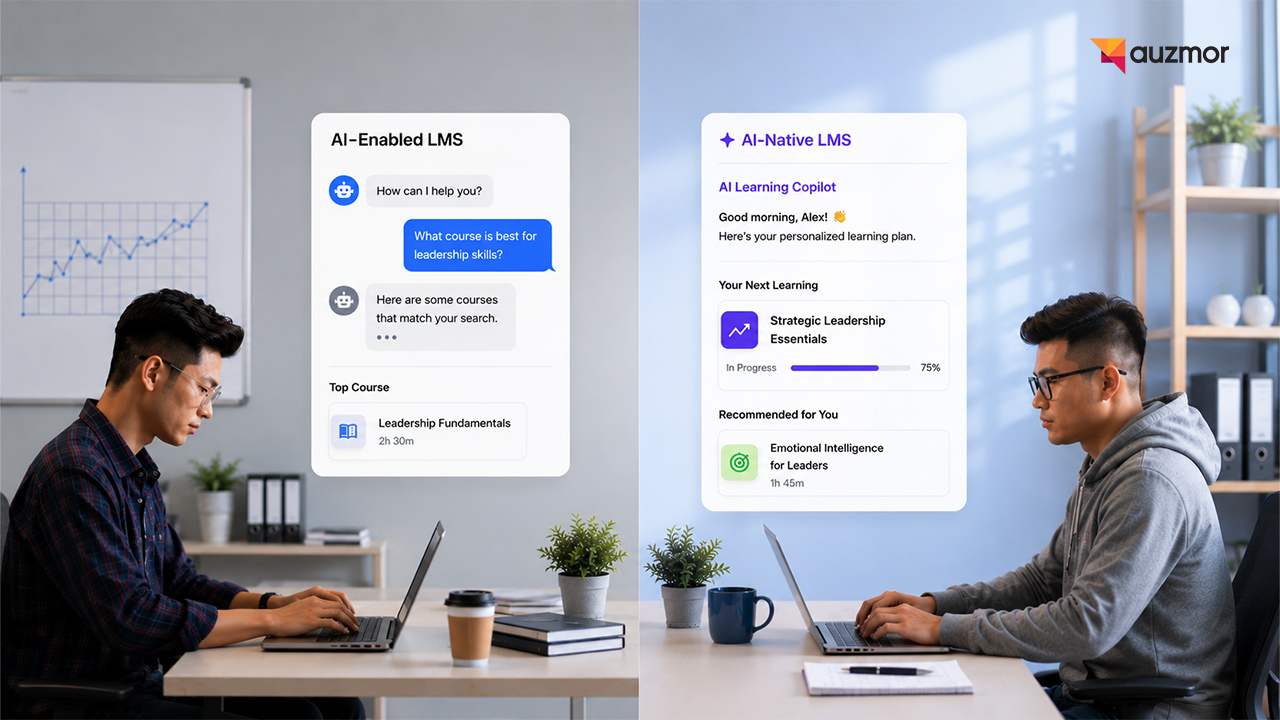
When we talk about the future of corporate learning, artificial intelligence takes up almost all the oxygen in the room. Every software vendor claims to have an intelligent platform today. But as organizations look closer at what these systems actually do, a massive gap is starting to emerge. That gap is the fundamental difference between an AI-enabled Learning Management System and an AI-native Learning Management System. Understanding this distinction is absolutely critical for anyone trying to build a workforce that can adapt to rapid change.
To put it simply, one approach bolts intelligence onto legacy software, while the other builds the entire system around intelligence from day one. When enterprise leaders want to achieve actual business results, they need to look past the marketing hype. They need platforms that are engineered for impact. This aligns closely with our core philosophy at ATC, where we deliver the complete AI solution by combining powerful platform technology with expert delivery services. For mid-market enterprises, this means choosing a path that prioritizes speed, quality, and practical results over unnecessary complexity. Building a solid technical foundation is essential for a strategic approach to enterprise architecture, and that principle applies perfectly to choosing your learning ecosystem.
Let us explore exactly how these two approaches differ across architecture, data integration, user experience, and enterprise scalability.