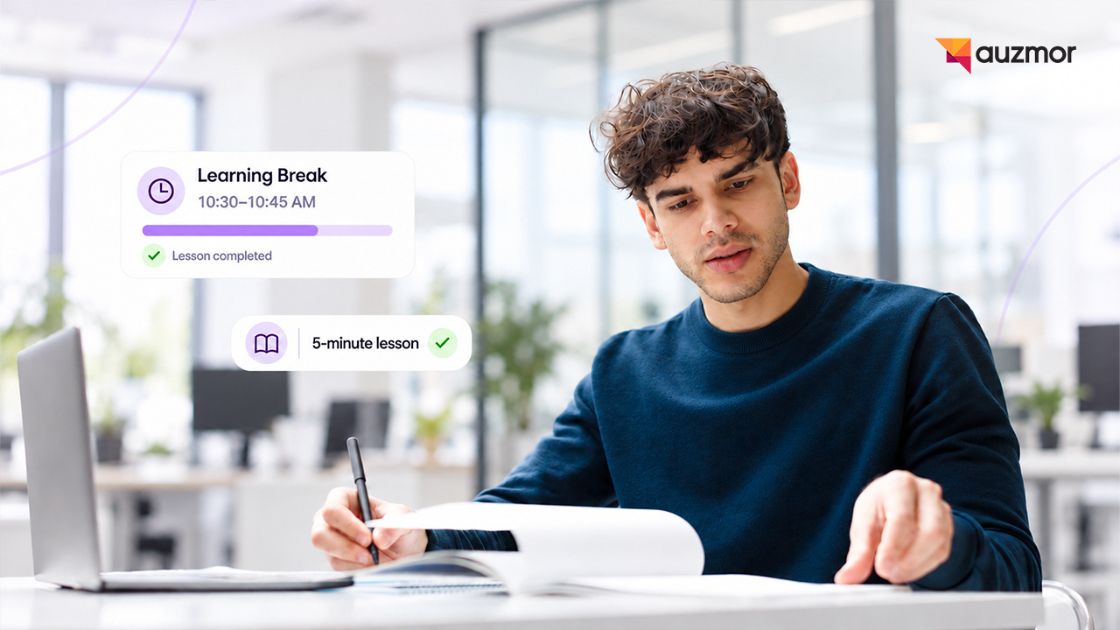
Most training programs die a quiet death around 6 PM. An employee logs off, closes their laptop, and somewhere in the back of their mind sits a half-finished compliance module or a leadership course they were "supposed to get to this week." It didn't get done that night. It doesn't get done the next one either. Eventually it just sits there, unfinished, until someone in HR sends a reminder email that gets ignored along with the first three. This isn't really a discipline problem, even though it gets treated like one. It's a design problem. Companies keep asking employees to treat training as a personal project, something to squeeze in once the workday ends, and then act surprised when it doesn't stick. The platforms built around a different premise, Auzmor among them, start from something simpler: training that lives inside the workday tends to get finished. Training that lives outside it mostly doesn't.
The data backs this up more than most L&D teams want to admit. LinkedIn's Workplace Learning Report has asked employees for years why they don't engage with the training their company offers, and the answer keeps coming back the same way. Not that the content is bad. Not that they don't see the value in it. Just that there's nowhere in their day to put it. Ask someone to do something after their shift ends, and that's not really a request for fifteen minutes of attention. It's a request for fifteen minutes out of the two or three hours they have left before dinner, kids, a commute, or the plain exhaustion of being "on" for eight straight hours. Training loses that competition almost every time.
The Hidden Cost of After-Hours Training
There's a quieter cost to this pattern too, one that never shows up on a completion dashboard. When training happens on someone's own time, it starts to feel like unpaid labor, even if nobody ever says that part out loud. Employees pick up on the message being sent: your growth matters, just not enough to interrupt actual work for it. That resentment builds slowly, and it tends to surface later as disengagement rather than a formal complaint anyone can act on. Flip the arrangement, and something changes. Training that happens during the workday, in short, planned pockets, gets treated the way it should be treated all along, as part of the job rather than an extra chore stacked on top of it. It's part of why asynchronous learning has become such a useful middle ground for a lot of teams. It gives people some control over when they learn, without ever pushing that responsibility into their personal time.
Why Shorter Training Gets Finished
Length matters more here than most people expect, too. A recent benchmark study looking at more than 200,000 e-learning courses found something worth sitting with: courses under five minutes were completed at a rate of roughly 85%, while courses running past fifteen minutes dropped to around 70%. That's not a small gap for a change that costs nothing to make. It suggests the real barrier usually isn't motivation so much as friction. Ask someone to carve out twenty minutes mid-shift and most people will find a reason to push it to tomorrow. Ask for five minutes between two meetings, and it's a different conversation entirely.
Building Training Around the Shape of the Workday
Making It Fit the Format People Already Use
This is where the format of the training platform itself starts to earn its keep. Tools built around bite-sized, mobile-friendly content, the kind Auzmor Learn is designed around, make it realistic to fit a lesson into a gap between calls or a lull on the floor, instead of requiring someone to block off a chunk of their evening for it. A warehouse employee checking a two-minute safety refresher on their phone during a break is a genuinely different experience from that same employee being asked to log into a desktop portal at home after their shift ends. One fits into a day that already exists. The other asks them to build a new one.
Attaching Training to the Moment It's Needed
Building training into the workday also means rethinking what training even looks like in the first place. A good chunk of it doesn't need to be a standalone module at all. It can attach itself to the moment someone actually needs it, a short walkthrough that pops up right before a new tool goes live, a two-minute refresher tied to a task someone's about to do, rather than a generic course sitting in a library nobody browses on their own. That kind of setup quietly erodes the idea that training is separate from "real work," because more and more, it just isn't. A lot of this comes down to smarter use of an e-content library, where existing material gets reused and resurfaced at the right moment instead of being rebuilt from scratch every time a new need shows up, which also happens to claw back a meaningful chunk of the hours L&D teams spend producing content to begin with.
Protecting the Time Itself
None of it works, though, without someone actually protecting the time. A manager who says training is a priority while double-booking their team's calendar all week is sending a much louder message than any values statement on the intranet. The organizations that get this right tend to build small, protected windows into the week, twenty minutes on a Tuesday, thirty on a Friday afternoon, and treat that block the way they'd treat a client call: not optional, and not the first thing to get bumped when the week gets busy. It sounds like a minor structural tweak. In practice, it's usually the difference between training that gets absorbed and training that gets postponed indefinitely. Teams working through employee training in a hybrid workforce run into this tension constantly, since remote and in-office employees rarely share the same natural pauses in their day, and protecting time ends up looking a little different for each group.
What This Looks Like for Frontline and Shift Teams
The same shift matters even more for frontline and shift-based teams, arguably more than it does for office staff. Someone working a retail floor or a production line doesn't have a laptop sitting open between tasks the way a desk employee might. For that group, training that fits into working hours usually means training that fits onto a phone, delivered in short bursts during a break or a slow stretch, rather than a long session that assumes a desk and an uninterrupted hour, neither of which tends to exist on a shift.
It Doesn't Take a Bigger Budget, Just Better Structure
None of this requires a bigger training budget, which is probably the part worth saying out loud. A lot of it comes down to restructuring what already exists: breaking a forty-minute course into four ten-minute ones, moving a session off the "homework" list and into a scheduled fifteen minutes during the week, or just making existing content easier to reach from a phone. Some of the more useful thinking on this comes from looking at cost-effective ways to grow employee skills, which makes a fair case that the real constraint most companies face isn't money at all. It's how the time and the content get organized in the first place.
Making Training Something People Actually Want to Finish
There's also a simpler truth underneath all of this: training people actually want to finish tends to look nothing like the modules companies have relied on for years. It's shorter, more specific, and closer to the actual work someone does that day. Getting that part right is its own challenge, one that a lot of teams are only now starting to take seriously, and it's covered well in pieces on what makes employees actually engage with training rather than avoid it.
Bringing Training Inside the Workday
Companies that make this shift tend to stop treating training as something that competes with the workday and start treating it as part of it. That's as much a cultural change as a scheduling one, and it usually takes a platform built with that goal in mind, something like Auzmor, to turn the idea from aspirational into something a team can actually run week to week. The employees who finish their training aren't the ones with more willpower left over after hours. They're the ones who were never asked to find that willpower in the first place.