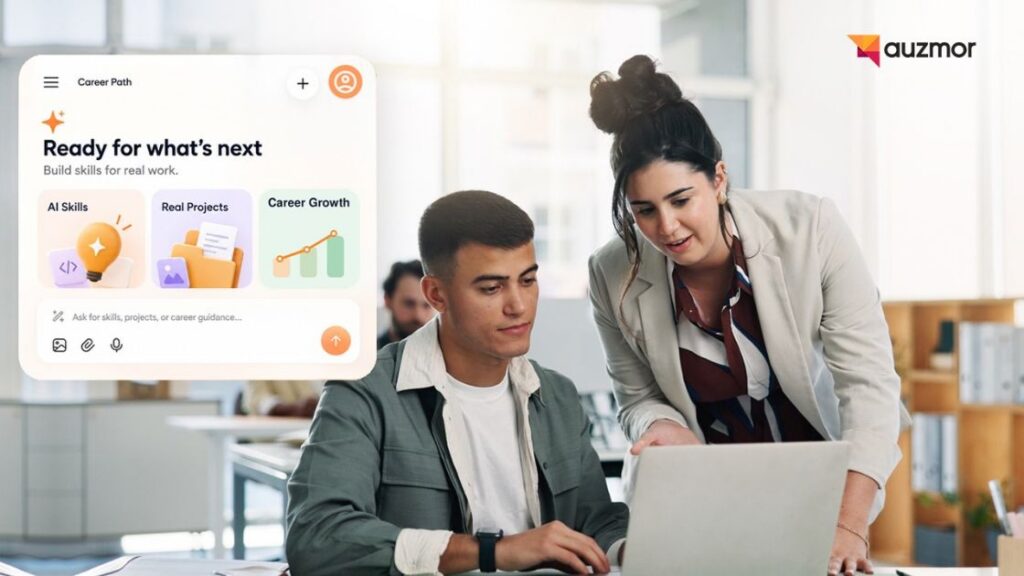



The business case for personalized learning has never been stronger, but scale has always been the bottleneck. AI-powered playlists are changing that equation for modern organizations.
Why smart playlists matter now
Corporate training is going through a big shift right now. Your organization probably spends between $1,200 and $1,500 per employee each year on learning and development. That adds up to a $340 billion global market. But here's the problem: traditional learning programs can't keep up with how fast skills are changing.
Leaders face a persistent challenge. How do you get the right content to the right person at the right moment without hiring an army of instructional designers? It's a question that keeps L&D teams up at night.
That's where intelligent automation comes in. Auto-curated learning playlists use AI to analyze skills gaps, performance data, and business priorities. Then they surface personalized learning paths at scale. These systems adapt in real time. They recommend micro-modules, videos, and assessments tailored to what each person needs to learn next.
This is different from static course catalogs or manually curated programs. For C-suite and L&D leaders, it represents a fundamental change. You're moving from episodic training events to something much more fluid: learning in the flow of work.
Harvard Business Review points out that generative AI is making this transformation happen faster than anyone expected. Personalized learning isn't just feasible anymore. It's efficient and measurable.
What an auto-curated learning playlist actually is
Think of an auto-curated learning playlist as Spotify for workplace learning. It's a dynamically generated sequence of training assets like courses, videos, articles, simulations, and job aids. Each one is tailored to close specific skills gaps for individual learners.
The system continuously pulls in data about your employees. It looks at their roles, performance metrics, how they engage with content, and even their interaction patterns across collaboration platforms. Machine learning algorithms then map those signals against your learning management system content library. The result? A recommendation engine that knows what each person should learn next.
Traditional learning experience platforms rely on keyword searches or static role-based paths. But AI personalization uses natural language processing to understand the semantic content of each asset. It matches that content to specific competencies.
Each employee gets a customized playlist that evolves as they progress. You're not just addressing broad categories like "leadership development." You're tackling micro-skills such as conflict de-escalation or prompt engineering for AI tools. Adaptive learning systems provide real-time feedback too. They adjust content sequencing based on quiz performance and engagement signals. It's like having one-on-one coaching at enterprise scale.
How AI builds a relevant playlist at scale
Building intelligent playlists requires four interconnected capabilities. Let me walk you through each one.
Data inputs: Clean, comprehensive data is the foundation. Leading systems pull from your LMS completion rates, assessment scores, performance reviews, job descriptions, and even anonymized collaboration-tool activity. Some platforms also feed in external data like labor market trends, patent filings, and regulatory changes. This helps predictive models anticipate which skills your workforce will need six to twelve months out.
Here's an example. An AI engine might detect rising demand for blockchain expertise in your industry. It can then proactively suggest upskilling paths before your competitors even start looking at the problem.
Algorithmic content tagging: Natural language processing automatically tags every video, article, and simulation in your content library. It adds rich metadata like topic clusters, difficulty levels, estimated time, and learning modalities. This semantic tagging lets the system distinguish between theoretical knowledge (like negotiation frameworks) and applied competence (like handling a live objection in a sales call).
Reinforcement learning then sequences these assets. It might add a "quick refresher" module before an advanced simulation to help with retention.
Personalization at the individual level: Behavioral analytics matter a lot here. AI tracks more than just course completions. It looks at how long learners pause on videos, which forum questions they post, and how often they revisit certain topics. These patterns build detailed learner profiles that reveal confidence gaps. The system can tell the difference between superficial familiarity and true mastery.
Using these profiles, it delivers hyper-targeted recommendations. Sales reps get scenario-based role-plays. Engineers receive coding challenges. Managers see simulated leadership dilemmas. It's all personalized to what each person actually needs to improve.
Governance and explainability: This is critical but often overlooked. Employees and managers need to understand why the AI recommends specific content. Leading platforms provide "explainability" dashboards that show which data inputs drove a recommendation. They also show how the learner's profile compares to team norms and which business KPIs the playlist aims to improve.
Privacy safeguards have to be baked in from day one. That means anonymization, consent protocols, and compliance with GDPR and other regulations. If you're evaluating vendors, ask about their AI governance frameworks upfront.
What leaders should expect: impact and KPIs
The business case for auto-curated learning playlists rests on three pillars. Speed to competence, engagement, and measurable ROI.
Measurable performance gains: McKinsey partnered with Deutsche Telekom to deploy personalized AI-powered training across 15,000 call center agents and 5,500 field service agents. The results were striking. The initiative produced a 10% increase in first-time resolution rates for call center agents. Field service resolution improved by 5% year-over-year. Customer likelihood to recommend the company jumped 14 points.
These gains didn't come from generic training rollouts. They came from AI engines that analyzed millions of call transcripts and field-service data points. The system identified individual skill gaps and delivered just-in-time micro-learning. That's the power of personalization at scale.
Engagement and retention: Peer-reviewed research backs this up. An MDPI study on adaptive learning found that AI-driven personalization improves both learner engagement and outcomes. The system tailors content difficulty, format preferences (video vs. text vs. simulation), and pacing to individual needs.
Organizations using AI-enabled learning systems report 30% higher employee engagement and 25% lower turnover. Why? Because employees experience training as relevant and timely. It's not a compliance checkbox anymore.
Strategic agility: This might be the most strategic benefit. Predictive analytics let L&D teams move from reactive gap-filling to proactive capability building. By scanning external labor-market signals and internal performance metrics, AI forecasts which competencies will drive business outcomes in the near term. This transforms learning and development from a cost center into a strategic planning partner.
Choosing the right platform: a buyer's checklist
Not all learning platforms are created equal.
Gartner's corporate learning technologies reviews show rapid adoption of AI features, but there's significant variation in maturity. As you evaluate vendors claiming AI capabilities, ask these six questions:
- Data inputs and integration: Does the platform pull data from your existing LMS, HRIS, performance management tools, and collaboration platforms? Can it incorporate external labor-market signals? If a vendor can't integrate with your current stack, you'll end up with data silos.
- Explainability and transparency: Can learners and managers see why specific content was recommended? Does the system provide confidence scores and alternative pathways? Black-box AI is a red flag.
- Governance and privacy: How does the vendor handle data anonymization, consent, and compliance with regulations like GDPR? What audit trails exist for AI decisions? You need clear answers here before signing anything.
- Content breadth and marketplace integrations: Does the platform support your existing content library and integrate with third-party providers like LinkedIn Learning, Coursera, or Udemy Business? Limited content options mean limited value.
- Analytics tied to business KPIs: Can you measure more than just course completions? You want to track business outcomes like time to competence, performance lift, and customer satisfaction scores.
- Cost model and scalability: Is pricing based on seats, usage, or outcomes? How does the platform scale as your workforce grows? Hidden costs add up fast.
The 2024 LinkedIn Workplace Learning Report shows that AI adoption is happening quickly, but buyer education still lags. Demand vendor demos that show real gap-analysis reports. Ask to speak with reference customers in your industry. Don't settle for glossy marketing decks.
Why Auzmor is worth exploring
Auzmor LMS has integrated AI-powered gap analysis to help organizations identify missing competencies and translate them into actionable learning paths. The platform's AI engine scans your existing course catalog, learner activity, and performance data to surface content gaps in real time. Then it auto-curates playlists aligned with team priorities and individual proficiency levels.
Unlike legacy systems that wait for annual reviews, Auzmor's approach is proactive. It monitors emerging skill needs and recommends targeted micro-learning before performance gaps widen. To see how this looks in practice, check out their detailed guide on AI for Learning Content Gap Analysis.
Three immediate steps for business leaders
Your organization doesn't need to wait for a multi-year transformation program to start benefiting from auto-curated playlists. Here's how to begin:
- Audit your current learning data ecosystem. Aggregate LMS logs, assessment scores, performance reviews, and job descriptions into a single view. Define clear competency frameworks. Break high-level capabilities into micro-skills. Identify where content gaps exist today. This audit will reveal quick wins and long-term opportunities.
- Pilot with a high-impact cohort. Choose one business unit like sales, customer success, or field operations. Partner with a vendor to run a 90-day pilot. Define success metrics upfront: time to competence, learner satisfaction, business KPI impact. Don't boil the ocean. Start small and prove value before scaling.
- Establish governance and change management. Train L&D teams and line managers to interpret AI-generated insights and translate them into action plans. Build a rhythm: quarterly reviews of AI performance, ongoing competency model updates, and regular alignment sessions with business leaders as priorities shift. Technology is only half the battle. Adoption depends on strong change management.
To see how this looks in practice, explore Auzmor's AI features and request a demo here.