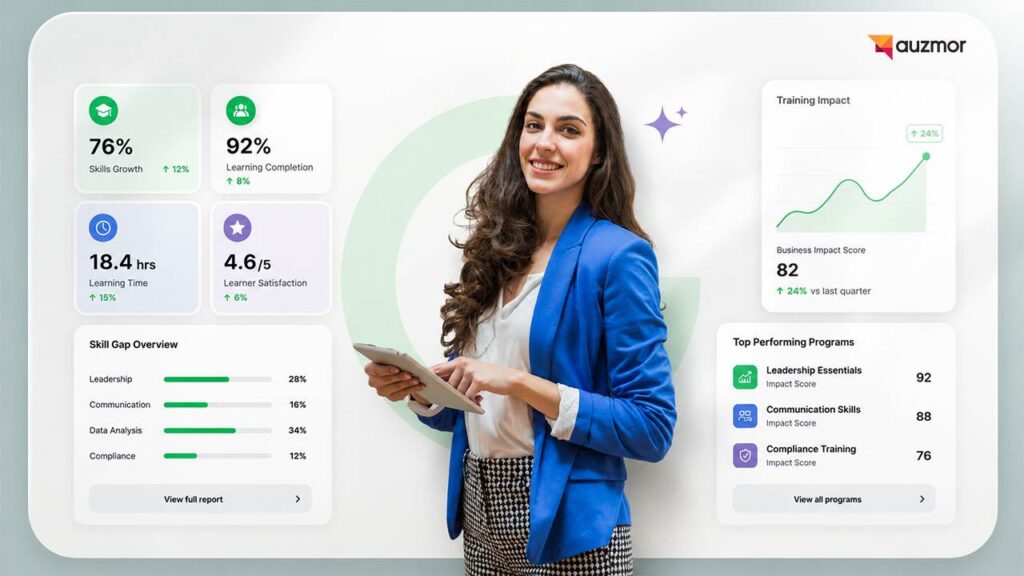



Here's something that should get your attention: organizations consistently rank employee retention as their top concern, and aligning learning to business goals has become L&D's primary focus . But here's the catch. Most L&D leaders still can't show their bosses the real business results they want to see.
Learning programs have tons of value. We all know that. The real issue is different though. Those old metrics we've been using - course completions and happy face surveys - they don't mean much to executives . Walk into any boardroom talking about engagement scores. The CEO is thinking about revenue per employee and how much it costs when good people quit.
Things are changing fast though. New analytics tools powered by AI are flipping this whole situation. These systems help L&D teams get past those feel-good numbers that look nice but don't tell the business story. Now we can draw clear lines between training programs and the results that actually matter to executives .
Why Executives Want ROI Numbers (And We Get It)
Business leaders aren't being tough just to be difficult. They face pressure from every direction to justify spending money. Every department and every project has to prove its worth. Think about what stresses out a CEO:- Whether the sales team hits their numbers each quarter
- How much it costs when good employees leave
- How fast new people become useful team members
- Customer happiness scores that affect whether clients stick around
- Staying compliant so the company doesn't get hit with big fines
What These Analytics Tools Actually Do (No Tech Talk)
When we talk about AI-powered analytics for L&D, think of it like having a really smart helper that never takes a break. This technology spots patterns and predicts outcomes automatically. It finds connections between training and business results that would take people weeks to figure out by hand. Instead of spending hours in Excel trying to see if leadership training helped with keeping people, the computer does that work nonstop in the background. It looks at completion rates, test scores, how engaged people are, and performance data from different places. Then it automatically connects those dots to business stuff like sales numbers and who's staying versus leaving . The really cool part happens when these systems don't just tell us what already happened. They help predict what's coming next. They suggest specific things to do to get better results . Getting AI to work well really depends on having good data and analytics set up first. Companies that invest in these tools now will be able to show clear business value while others are still fighting with basic reports .Three Ways These Analytics Actually Prove ROI
Connecting Training to Business Results This is probably the strongest thing these analytics can do. Most L&D teams have struggled with this for years. Instead of saying "most of our sales people finished the negotiation course" (which tells executives nothing useful), we can now show direct connections between training participation and improved business performance. Here's how it works. The analytics track groups of employees through their whole training experience. Then they measure how performance changes over time. They account for other stuff like what job someone has, how long they've worked there, and how they performed before. So we get clean data about what training actually does . L&D professionals are finally moving away from those meaningless metrics toward measurements that actually show value to the organization . Spotting Problems Before They Happen Here's where these analytics get really useful. The systems can actually predict which employees might struggle, perform poorly, or leave the company. Then they suggest targeted training before problems get worse. The technology looks at patterns in how engaged people are, performance reviews, learning behaviors, and other signals that human managers usually miss until it's too late . Analytics and measurement tools have become absolutely essential for learning organizations . The most successful companies use data to make decisions about talent development before problems hit instead of always playing catch-up. Getting More Value for Each Dollar Spent L&D budgets have limits. Executives want to see every dollar working as hard as possible. These analytics optimize how we deliver training by showing what actually works for different groups of employees. This means we stop wasting money on programs that don't drive results. We can focus on the stuff that does work. Our Internal report shows companies are increasingly focused on improving training efficiency and demonstrating clear returns on learning investments .Mapping What Executives Care About to What We Measure
Here's where the rubber meets the road. We need to connect executive KPIs to L&D metrics in a way that makes sense to both sides:| What Executives Track | What L&D Measures | Analytics Tool Used | Business Impact | Where to Get Data |
| Revenue per employee | Sales quota performance after training | Performance prediction for groups | Improved quota achievement rates | LMS data, CRM sales results, performance reviews |
| Employee retention | Engagement scores and learning participation | Risk modeling for who might leave | Reduced turnover in key roles | LMS engagement, HR systems, exit interviews |
| Time to competency | Skill assessment progress | Learning path optimization | Faster onboarding for new hires | Assessment platforms, manager feedback, productivity metrics |
| Customer satisfaction | Service training completion rates | Performance connection analysis | Improved customer satisfaction scores | Training records, customer feedback, support tickets |
| Compliance risk | Certification completion and retention | Risk prediction modeling | Reduced compliance violations | LMS tracking, audit results, regulatory reporting |
Getting Started Checklist (90-Day Action Plan)
Getting started doesn't have to feel overwhelming. Here's a practical roadmap: Data Foundation (Weeks 1-2):- Figure out what data sources we already have (LMS, HRIS, performance systems, CRM)
- Set up basic data quality standards - bad data in means bad results out
- Connect our most important business KPIs to learning metrics we can actually track
- Get stakeholders to agree on what success looks like
- Check out analytics platforms that work well with our current systems
- Make sure we're covered on data privacy and security
- Set up automated dashboards that actually make sense to business leaders
- Test everything multiple times
- Pick one high-impact training program for our first measurement effort
- Set baseline numbers before we launch anything
- Track how people progress and business outcomes as they happen
- Schedule monthly check-ins with business stakeholders
- Create reports that executives can actually understand and use
- Set up quarterly business reviews to share results
- Write down our wins and failures - both teach us things
- Plan expansion based on what we learn from the pilot