


Let us talk about a fourth-grade student who cannot quite grasp the concept of fractions. When that student falls behind the rest of the class, it is rarely just an isolated academic hiccup. It is the very first warning sign of a future workforce bottleneck.
For business leaders across the United States, the health of our local school systems directly impacts long-term economic stability. Whether you run a B2B software company or a consumer retail brand, the students struggling to catch up today are your future talent pipeline. They are your future consumers. They are the next generation of innovators. Yet our traditional, static classroom models continue to leave millions of these students behind. In classrooms characterized by a massive diversity in learning speeds and backgrounds, teachers are stretched far past their breaking points.
To solve this systemic issue, district administrators and education technology developers are looking toward a different approach. By utilizing adaptive AI tools in K-12 education, schools finally have a scalable mechanism to identify learning gaps early. They can personalize support, reduce crushing administrative burdens, and intervene before a student permanently disengages from the learning process.
The Stubborn Reality of the Learning Gap
The challenge of uneven academic pacing is not a new phenomenon, but recent historical events have highlighted its stubborn persistence. The American education system is still grappling with profound levels of unfinished learning. We can see the depth of this issue clearly in the data provided by the National Center for Education Statistics.
The data paints a sobering picture of our current academic landscape. According to the 2024 National Assessment of Educational Progress (NAEP) report, reading scores for both fourth and eighth graders dropped significantly compared to pre-pandemic levels. Math scores show a similarly troubling trend. While fourth-grade math saw a slight uptick recently, the numbers remain well below historical benchmarks. Eighth-grade math scores are trailing 2019 levels by a full eight points.
Why do these learning gaps in K-12 persist despite massive investments in school funding and district interventions? The reality comes down to simple classroom logistics and human limitations.
In a standard public school classroom of thirty students, a teacher may have learners operating across four entirely different grade levels of proficiency. A single educator cannot physically deliver thirty unique lesson plans every single day. When the core curriculum moves forward but foundational concepts remain unmastered by certain students, the educational gap compounds. Without scalable ways to deliver personalized support, students who fall behind usually stay behind.
What Adaptive AI Tools Actually Do in the Classroom
To understand the solution, we have to strip away the science fiction narratives and define what these technologies actually do. Adaptive AI tools are not magical replacements for human instruction. They are highly responsive, data-driven systems designed to improve how quickly schools can react to a struggling student.
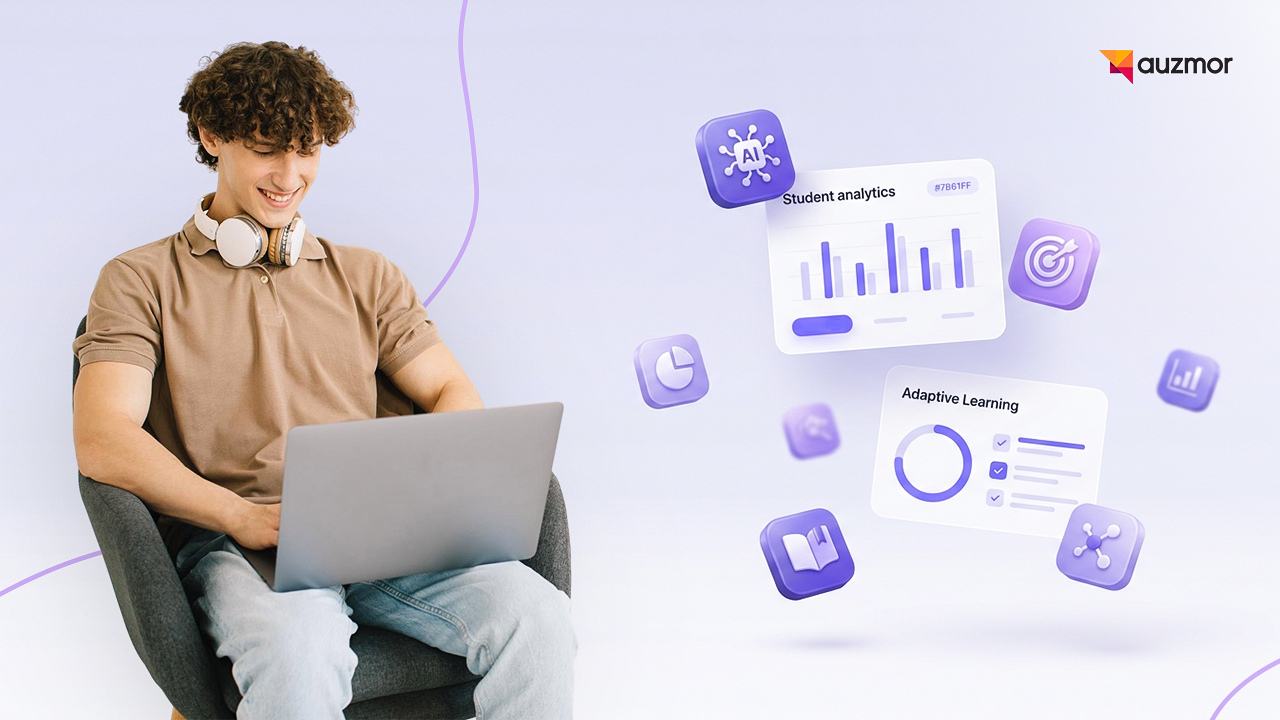
At their core, adaptive learning systems use intelligent algorithms to analyze student interactions in real time. They look at how long a student takes to answer a specific question. They track the exact types of errors a learner makes. Based on this continuous stream of data, the technology dynamically adjusts the learning experience.
Instead of waiting for a bi-weekly quiz to reveal that a student is struggling with algebra, the system identifies the friction point the exact moment the student begins to practice. If a student masters a concept quickly, the software accelerates them to more advanced material. If they struggle, it automatically reroutes them to foundational exercises to build up their basic competency.
AI can also recognize specific patterns in incorrect answers. It flags exactly why a student is getting a problem wrong, which gives teachers a massive advantage. By automating the grading process and tracking progress in the background, these tools free up educators to do what they do best. They get to spend their time mentoring, guiding, and instructing the students who need them the most.
The Direct Connection to Business and Workforce Readiness
It is very easy for corporate decision-makers to view K-12 education as a world entirely separate from the boardroom. However, K-12 outcomes are deeply intertwined with broader organizational success. Stronger learning foundations today directly influence the corporate realities you will face tomorrow.
First, there is the massive issue of future workforce readiness. A workforce that lacks critical thinking, reading comprehension, and foundational math skills requires significantly more corporate training and onboarding. According to research from organizations like the RAND Corporation, early academic interventions are directly linked to higher graduation rates and better career readiness. When schools successfully use personalized learning to elevate student performance, they produce high school and college graduates who are far more agile and ready to acquire specialized job skills.
Second, the use of AI in the classroom impacts digital fluency. Students who learn alongside intelligent, responsive digital tools develop a native understanding of how to interact with technology. This level of digital fluency is completely non-negotiable for the modern workforce.
Finally, understanding the mechanics of these educational interventions provides a perfect mirror for corporate training environments. The same exact principles that make AI effective for a struggling eighth-grader apply to upskilling an adult workforce. Business leaders who understand this dynamic can better figure out how to measure the ROI of AI training programs within their own companies. They recognize that targeted interventions yield far better returns than forcing employees to watch static compliance videos.
Real-World Use Cases of AI in Education
The theoretical benefits of AI in education become incredibly clear when we look at how these tools operate in real school districts.
Consider a scenario involving targeted intervention for a student struggling with reading comprehension. An adaptive platform will not just assign them easier texts to read. It will analyze their reading patterns to determine if the core issue is vocabulary, phonics, or sentence structure. It then curates targeted micro-lessons to build that specific skill. This process turns a generalized academic struggle into a highly solvable path forward.
We also see massive benefits in predictive teacher dashboards. Through modern K-12 learning platforms, teachers receive daily reports that highlight which students need immediate human intervention. A teacher might log into their system and see that three specific students are struggling with the exact same math concept. The teacher can then pull those three students aside for a focused mini-lesson while the rest of the class continues with their adaptive practice.
For school districts looking to quickly build specialized curriculum, administrative teams can leverage tools like an AI Course Creator to rapidly outline and structure content. This significantly reduces the administrative burden on district instructional designers who are trying to keep up with changing state standards.
Learning gaps are also not just about students falling behind. They are about advanced students stalling out due to boredom. Adaptive tools ensure that gifted students are continually challenged by automatically unlocking advanced modules. This happens without forcing the teacher to manage two completely separate lesson plans simultaneously.
What Responsible Implementation Looks Like in Practice
Balancing the incredible opportunity of AI with the heavy responsibility of deploying it safely is paramount for school districts. The ultimate goal is school performance and student growth, not unchecked technological reliance.
The U.S. Department of Education recently released comprehensive guidance on artificial intelligence. They established a critical foundational principle that demands a human-in-the-loop approach. The Department firmly rejected the notion that AI could ever replace human teachers. Instead, AI must be utilized strictly to augment human intelligence. Educators must retain ultimate oversight over student intervention and academic progress.
Similarly, international organizations like UNESCO stress the absolute necessity of data privacy and equity. Schools must rigorously audit their technology vendors to ensure student data is protected. No student data should ever be exploited or used to train public language models without explicit, informed consent from parents and districts.
Responsible implementation requires schools to guide students toward using AI for cognitive augmentation. We want students using technology to deepen their understanding of complex problems. We do not want them using AI for cognitive offloading, where they simply use the tool to do the heavy lifting for them. Successful adoption requires pilot testing before scaling across a district, extensive bias awareness training, and transparent communication with the community.
How Modern Platforms Support This Educational Shift
To execute this vision securely and at scale, schools and district administrative teams require a robust digital infrastructure. You simply cannot deliver highly personalized, data-driven learning through scattered spreadsheets and fragmented software programs. This is exactly where modern learning management systems come into play.
When evaluating Learning Management Systems: 2025 Trends & Tools, it becomes obvious that the platforms succeeding today are those built for agility. A structured LMS for learning provides the foundational architecture where adaptive AI tools, core curriculum, and student reporting all live securely together.
Auzmor LMS is a perfect example of a platform designed to simplify this massive complexity. While deeply embedded in corporate and enterprise training environments, the core architecture of Auzmor LMS naturally supports the structured delivery of personalized learning experiences. It allows administrators to deploy courses smoothly, track learner progress through intuitive reporting, and centralize the entire educational experience.
By utilizing the 13 must-have features of a learning management system, platforms like Auzmor LMS help educational teams bridge the gap between data collection and meaningful action. These features include advanced analytics, mobile accessibility, and custom learning paths. It provides the exact visibility leaders need to ensure that every learner is tracking toward success, all without overwhelming the educators who are managing the process on the ground. Furthermore, exploring AI-Powered Social Learning That Actually Scales Knowledge Across Teams shows how collaborative features can encourage peer-to-peer learning, mirroring the group work essential in both classrooms and boardrooms.
Moving Forward
The persistence of unfinished learning is a highly complex problem, but it is no longer an invisible one. The data is clear, the stakes for our future workforce are incredibly high, and the technology required to address the issue is finally mature enough to make a tangible difference.
By integrating adaptive AI tools in K-12 education, we can finally move away from the severe limitations of the one-size-fits-all classroom. We can give teachers the insights they need to intervene precisely when a student stumbles. We can offer students the personalized pacing they need to thrive. We can provide administrators with the actual data required to measure real school improvement.
Technology will never replace the empathy, mentorship, and deep connection of a great human teacher. But when implemented responsibly, an adaptive learning platform can remove the administrative friction that holds those teachers back.
For business leaders, district administrators, and education technology innovators, the mandate is clear. We must invest in platforms that elevate human potential and prepare our students for the future. If you are looking to explore how an intuitive, scalable learning platform can transform your organization's training or educational delivery, discover how Auzmor LMS can help you build smarter, more responsive learning environments today.