Building an AI-Ready Learning Ecosystem, Where to Start

Nick Reddin
Building an AI Ready Learning Ecosystem Where to Start
The skills conversation has moved from theory to urgency. The World Economic Forum says employers expect 39% of key skills to change by 2030, and that technological skills, especially AI and big data, are rising faster than any other skill set. That is not a distant trend. It is the new ground under every company trying to hire, train, and retain people who can keep up.  An AI-ready learning ecosystem is the answer, but it is not a gadget. It is the way a company connects skills mapping, onboarding, training content, governance, reporting, and learning delivery so people can learn in the flow of work instead of in disconnected bursts. McKinsey says the challenge of AI at work is not mainly a technology challenge. It is a business challenge that requires leaders to align teams and rethink how work gets done.


What an AI-Ready Learning Ecosystem Actually Is

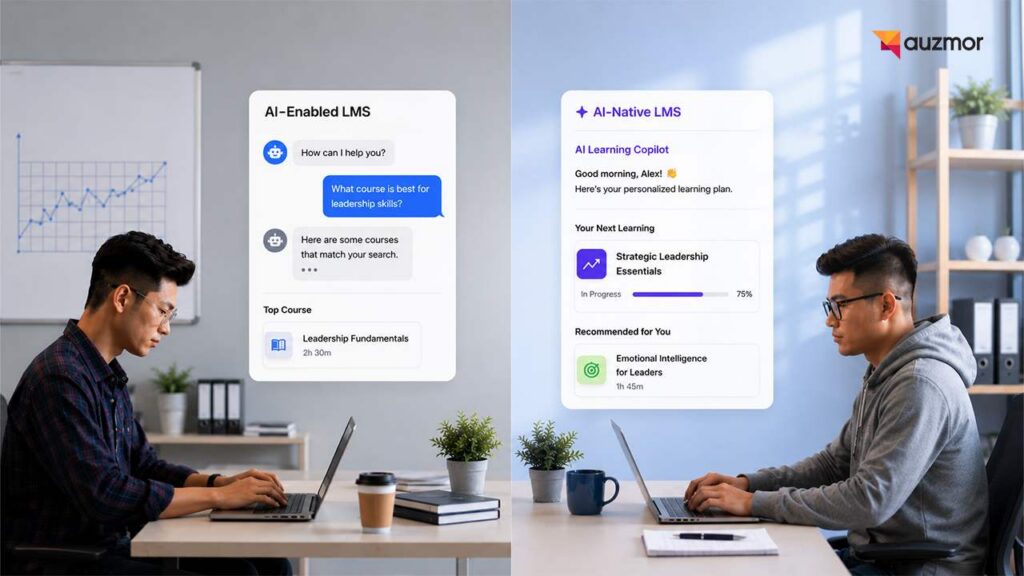
In plain English, an AI-ready learning ecosystem is the system your company uses to help people learn the right things at the right time, in the right format, with enough oversight to make sure the training actually helps performance. It includes onboarding, compliance, role-based training, skills development, reporting, and personalized learning paths. SHRM notes that AI is pushing learning toward real-time, adaptive journeys that can monitor progress, issue reminders, and spot drop-off points.  That matters because traditional training models were built for a slower workplace. They rely on fixed courses, annual refreshers, and one-size-fits-all assignments. That model breaks down when roles are changing faster, teams are distributed, and AI is reshaping how work gets done. A learning ecosystem gives leaders a way to respond with structure instead of scrambling after the fact. 

Why Leaders Need to Act Now

The business case is simple. Skills are shifting, AI is entering more daily tasks, and leaders cannot assume people will figure it out on their own. McKinsey reports that many employees are already familiar with generative AI tools, but a large share still want support and guardrails. In other words, adoption is happening, but confidence and consistency are not automatic. That is why learning is becoming a core business capability, not a support function. McKinsey’s 2026 view on learning and development in the AI age says organizations will need reskilling and upskilling at a scale not seen before, and that learning will need to become part of performance, adaptability, and resilience.  For US business leaders, the pressure shows up in practical ways. New hires need to ramp faster. Managers need to coach people through new tools. Customer-facing teams need to stay accurate and confident. Compliance training has to be current. Internal mobility depends on visible skills. When learning is fragmented, all of that gets harder. 

Start With Business Outcomes, Not Tools

The best place to begin is not with software shopping. It is with the outcome you want. Ask what the business needs most right now. Faster onboarding? Better compliance? Stronger sales enablement? Lower turnover? Better customer experience? Faster time to productivity? Start there and work backward. McKinsey’s AI reporting keeps pointing to the same theme. The winners are the companies that tie AI and learning to business value, not novelty.  That shift sounds obvious, but many organizations skip it. They buy tools before defining what success looks like. Then they end up with activity, not impact. A cleaner approach is to name the business problem, identify the roles most affected, and decide which skills will move the needle first. 

Audit the Current Learning Stack

Before adding AI to anything, look at what already exists. In many companies, training lives in slide decks, email threads, spreadsheets, shared folders, and isolated sessions that no one can fully track. That creates blind spots. Leaders cannot easily see who completed what, which content is outdated, where people are struggling, or how training connects to performance.  This is where the learning management system becomes essential. Our LMS guide explains that connecting learning systems with HR systems reduces data duplication and makes it easier to spot patterns between learning, advancement, performance, and attrition. In other words, the stack should help you see the business, not just store content.

Build the Ecosystem in Layers

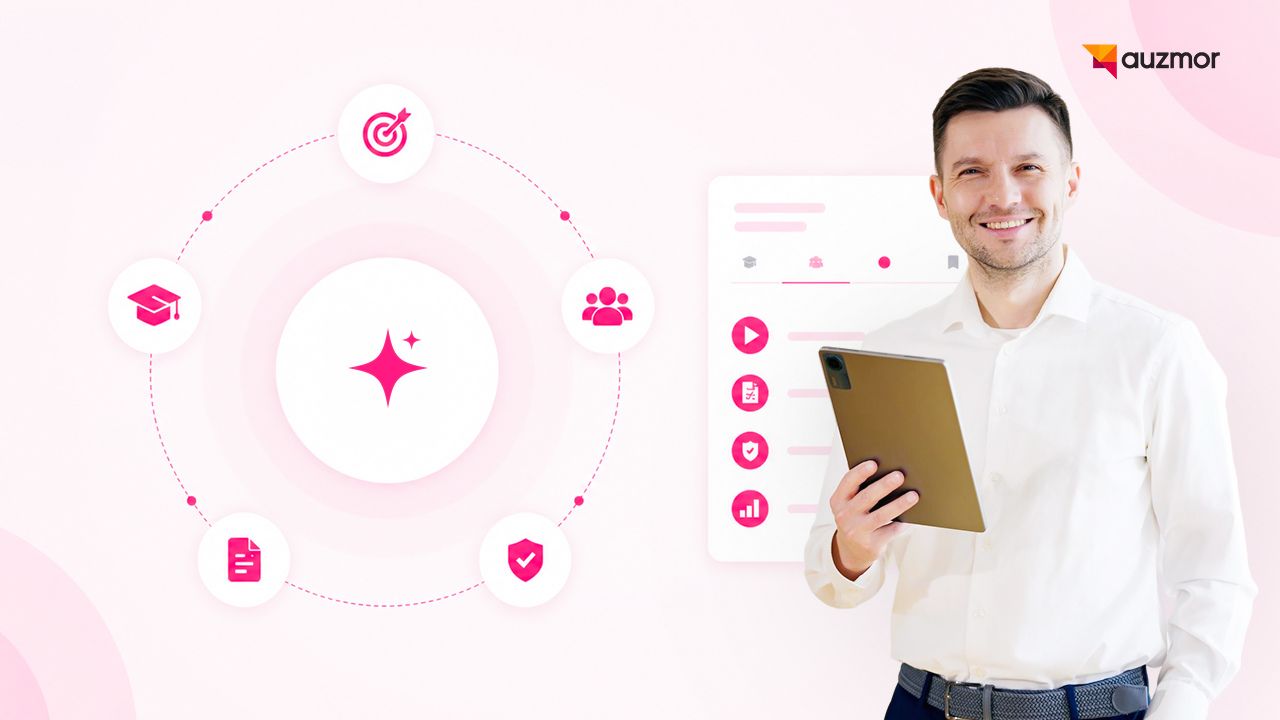
A strong learning ecosystem is usually built in layers. First comes content, which includes onboarding, compliance, product training, and role-based learning. Then comes skills, which means deciding what capabilities matter most for each role. Next comes governance, which gives someone ownership over content quality, access, and review. Then comes analytics, which helps leaders see what is working. Finally comes delivery, which is how learning reaches people through mobile access, blended formats, and integration with daily work. This is where a platform like Auzmor Learn can fit naturally. It is positioned as an all-in-one LMS with employee development, compliance training, customer training, reporting, blended learning, and mobile-friendly access. That does not make it the strategy. It makes it one of the practical ways to put the strategy to work without scattering the whole learning process across five different systems. 

What to Look for in the Platform

Once the strategy is clear, the platform should support five things well. It should personalize learning paths. It should map skills to roles. It should produce useful reports. It should handle compliance and certifications cleanly. It should be easy for people to use on mobile, in a browser, and in blended formats. SHRM’s reporting on AI-powered learning makes the case for adaptive journeys, reminders, and drop-off detection, which are the kinds of capabilities that turn learning from static to responsive.  It also helps if the platform can support the wider learning journey, not just formal courses. That includes quick refreshers, live sessions, microlearning, and content that managers can use in real time.

Governance and Measurement Matter More Than Hype

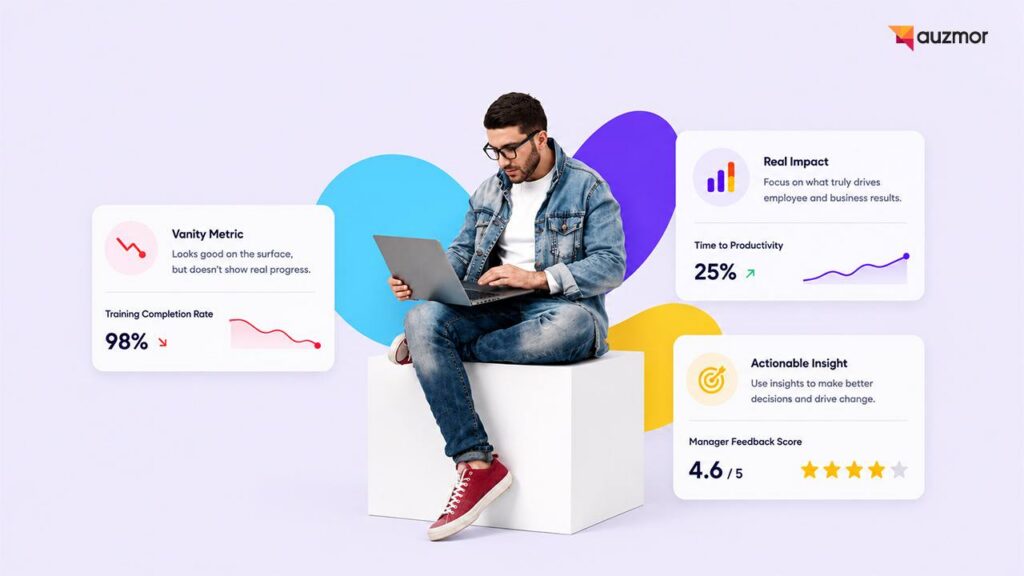
AI in learning needs rules. NTIA’s AI Accountability Policy Report frames accountability as a chain that runs from documentation and disclosure to independent evaluation and, where needed, consequences. That is a useful way to think about learning systems too. Someone should own what content gets created, who checks it, what data gets used, and how decisions are reviewed.  Measurement should also be tied to business results, not vanity metrics. Completion rates are fine, but they are not enough. Leaders should also watch time to productivity, onboarding ramp time, compliance readiness, manager confidence, internal mobility, and retention in critical roles. A learning ecosystem should help you answer whether people learned and whether the business got stronger. 

A 90-Day Starting Plan

In the first two weeks, choose the business outcome you care about most and identify the roles that affect it. In weeks three and four, audit the current learning content, reporting, and tools. Find the gaps, the duplicate work, and the places where training disappears into the fog. In month two, map the priority skills and build the first learning paths. Keep the design simple. Use the mix of self-paced learning, live sessions, manager coaching, and role-specific practice that fits the job.  In month three, launch one pilot and measure it honestly. If you are working with onboarding, compliance, or a customer-facing role, this is where our platform such as Auzmor Learn can help bring delivery, tracking, and reporting into one place. Then refine the program based on what the data says and what managers are seeing on the ground. 

Conclusion

An AI-ready learning ecosystem is built step by step. It starts with business goals, then skills, then content, then governance, then measurement, and only then the platform layer that ties it together. The companies that move first will not be the ones with the flashiest AI story. They will be the ones that help people learn faster, work better, and stay ready for what comes next.  If you are ready to move from scattered training to a connected AI-ready learning ecosystem, Auzmor Learn is a practical place to begin because it brings training, reporting, personalization, and blended learning into one workflow. That is the kind of backbone that makes the rest of the system easier to manage, easier to measure, and easier to scale.  CTA: Start with one role, one business outcome, and one pilot. Build the ecosystem from there, one useful layer at a time

Related Posts

Menu

Compliance training

Become audit-ready

Employee development

Compliance

Sell Training

Customer training

Partner training

training online lms

An all-in-one LMS

Content

Content Marketplace

Custom Content

Auzmor Learn

Get people hooked to learning

Auzmor Office

Unforgettable employee experience

Auzmor LXP

Tailored learning experience

Auzmor Learn

Get people hooked to learning

Content creation

Social learning

Blended learning

Reporting & insights

Mobile app

Extended enterprise

Checklists

E-commerce

Blog

Case studies

White papers

Discover top trends to facilitate smarter business practices

About

Careers

Contact

Support

join auzmor team

Join an innovative team

E-Learning Content

Content Marketplace

Custom Content

Public Sector

On-Premise

Auzmor K12

Auzmor Higher Education